For care partners
Caring for someone with multiple myeloma can be very overwhelming, but there are resources to help you
When you are caring for someone with multiple myeloma, you may need to provide them with both emotional and physical support. While it is important to support them in their treatment journey, you are in this together, and you need to find ways to support yourself as well.
Remember that you're not alone;
you have support.
you have support.
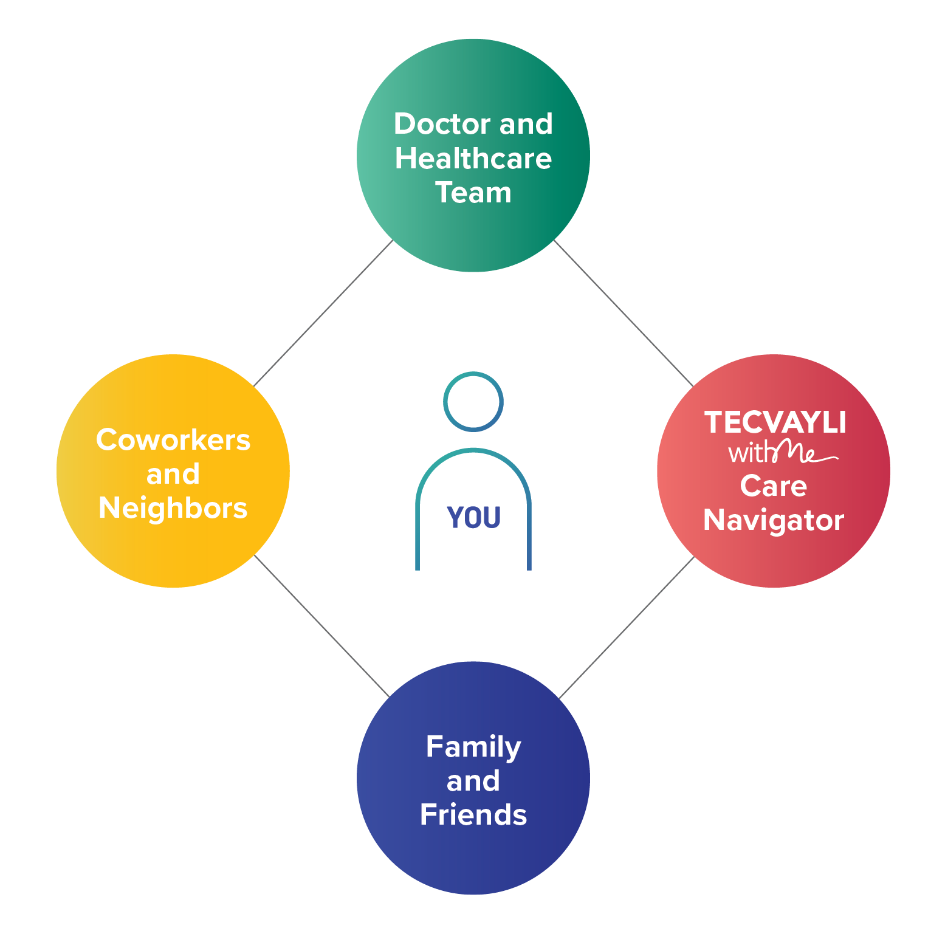

Being an available care partner means also taking care of yourself
Here are some tips that you can use to care for yourself:
- Ask for help if you need it. Many care partners look back and realize they had put too much on their plate and wish they had asked for more help
- Take care of your own health. Make sure you are eating well, getting some exercise, resting, and not neglecting your own medical care
- Be sure to make time to relax and to do things that are important to you
- Join a care partner support group. Connecting with people going through a similar experience can let you know you are not alone and give you new ideas for coping
- Consider writing in a journal. Keeping a journal can help lessen negative thoughts and feelings you might have
Caregiving may take a toll on you, and you need breaks and support too.
Preparing for treatment
You can help the person in your care prepare to receive treatment with TECVAYLI®
It might be helpful for them to wear comfortable clothing as the injection site can be located in the stomach area or thigh.
You should also tell the person in your care's healthcare provider about all of their medical conditions, including if they:
- Have an infection
- Are pregnant or plan to become pregnant. TECVAYLI® may harm their unborn baby
- Their healthcare provider should do a pregnancy test before they start treatment with TECVAYLI®
- They should use effective birth control (contraception) during treatment and for 5 months after their last dose of TECVAYLI®
- They should tell their healthcare provider right away if they become pregnant or think that they may be pregnant during treatment with TECVAYLI®
- Are breastfeeding or plan to breastfeed. It is not known if TECVAYLI® passes into breast milk. They should not breastfeed during treatment and for 5 months after their last dose of TECVAYLI®
Tell the person in your care's healthcare provider about all the medicines they take, including prescription and over-the-counter medicines, vitamins, and herbal supplements.
They should also tell their healthcare provider about all the medicines they take, including prescription and over-the-counter medicines, vitamins, and herbal supplements.
Treatment day
You can help by arranging transportation to and from their appointment so that they have the proper time to rest after treatment. Because some people may feel confused after treatment with TECVAYLI®, they should not drive or operate heavy or dangerous machinery during and for 48 hours after the TECVAYLI® “step-up dosing schedule” is completed, or at any time during treatment with TECVAYLI® if they develop new neurologic symptoms until the symptoms go away.
After treatment
Help the person in your care keep track of any side effects they are experiencing by encouraging them to use the symptom tracker in their Starting Treatment with TECVAYLI® Guide, or you can keep track together. Take a look at the side effects to watch out for in the , and report to their healthcare provider any side effects that the person in your care experiences.
Additionally, you can ask their doctor or nurse how to manage any injection site reactions that the person in your care may experience. They can give you tips for how to help with bruising, pain, swelling, or any other reactions after injection. Note any additional questions you or the person in your care have so you can refer to them at the next appointment.
Downloadable care partner resources
TECVAYLI® Care Partner Brochure
Become more familiar with TECVAYLI® and what you and the person you care for can expect
Care Partner Wallet Card
A card to share with the healthcare team of the person you care for so they know the person in your care is receiving TECVAYLI®
Learn more about community support